
Indian-American scientist Amit Kshatriya's journey from watching rocket launches in Houston to becoming NASA's Associate Administrator is a testament to his dedication and expertise in space exploration.

The mission ferries four astronauts -- NASA's Reid Wiseman, Christina Koch and Victor Glover and Canada's Jeremy Hansen -- onboard the Orion spacecraft for a 10 day lunar flyby. Unlike the Apollo missions that aimed for landing, Artemis II is focused on testing. The crew will evaluate critical systems such as life support, navigation, and communication in deep space -- essential steps before humans can return to the lunar surface.
The successful Artemis II mission has boosted confidence in India's upcoming Gaganyaan mission, as both aim to demonstrate similar spaceflight capabilities. Experts highlight the collaboration between ISRO and NASA and the shared training programmes for astronauts.

Amit Kshatriya, a decorated Indian-American and NASA veteran, has been appointed as NASA's new associate administrator, marking a significant step in the agency's exploration efforts.
'You can observe a lot of things from space.' 'Another thing is communication, in real time, especially in war-like situations.' 'During Operation Sindoor, we could play our part well.'
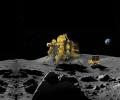
In a boost to the space programme, the government on Wednesday approved the Chandrayaan-4 mission to bring back moon rocks to earth, to send a spacecraft to orbit planet Venus and to expand the Gaganyaan project to build an Indian space station.

ISRO Chairman V Narayanan announced the development of a massive rocket capable of placing 75,000 kg payloads in low earth orbit, highlighting India's growing space capabilities and future satellite launches.

ISRO made efforts to re-establish communication with rover Pragyan and lander Vikram after they were put into sleep mode in September following the onset of night on the moon.

'This may open up doors for private players in India to collaborate with global players in commercial missions.'

The Human-rated LVM3 vehicle, the Crew Escape System and the Crew Module and Service Module are all in final stages of testing and integration.

The rover will carry out in-situ chemical analysis of the lunar surface during the course of its mobility.

After the historic success of its Chandrayaan-3 lunar mission, Indian Space Research Organisation (ISRO) is going full throttle with its plans to send Indian astronauts for the first time to the Moon by 2040, ISRO Chairman S Somanath said.

China's President Xi Jinping congratulated scientists on the complete success of the Chang'e-5 mission.

Scrapping NASA's"Back to Moon" project, US President Barack Obama gave a new mission to the country's civilian space programme agency-a manned mission to Mars in a decade and sending astronauts to explore asteroids beyond the moon by 2025.

While New Jersey, US-based OrbitBeyond leads a consortium of subcontractors who have designed and developed hardware for deep space missions, Bengaluru-based Team Indus is leading OrbitBeyond's lander engineering, reports T E Narasimhan.
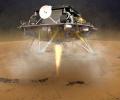
The rover, Zhurong, named after a god of fire and war in Chinese mythology, landed at the pre-selected area in Utopia Planitia on Mars, the state-run Xinhua news agency reported.
The six-wheeled solar-powered rover named Zhurong, resembling a blue butterfly and with a mass of 240 kg, slowly trundled off a ramp on the lander to hit the red, sandy soil of Mars, starting its journey to explore the fourth planet from the Sun.

The New York Times, The Washington Post, The BBC and The Guardian, among many other leading foreign media outlets, all carried stories on Chandrayaan-2, India's landmark moon mission.

All progress in space should excite us and encourage us to be optimists about a better future for our planet and all of us, asserts Aakar Patel.

From The New York Times to BBC and The Guardian to The Washington Post, the historic event in India's space programme on Wednesday made headlines across the globe.

After Chandrayaan-3 touched down on the Moon, the Congress on Wednesday said it is a collective success of every Indian and ISRO's achievement reflects a saga of continuity and is truly fantastic.

Having reached the Red Planet, ISRO can now focus on getting humans in space and secure the resources to do it

Chandrayaan-3's success is a must for India's space ambitions; we can't afford to lose out. And for realising our space dreams, the Indian private sector must be encouraged because if we lose this race, the moon, Mars, and mineral-rich asteroids will already be crowded before we reach there.
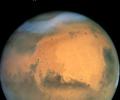
As India on Tuesday stole the march over China by launching a mission to Mars, Beijing called for "joint efforts" to ensure peace in outer space.

Leading scientists and experts said this monumental accomplishment not only marks India's indelible imprint on lunar exploration but also demonstrates the prowess of human collaboration, determination, and cutting-edge technology.

'It's vital that over the next 10 years, that India, the US and the Artemis Accords family of nations come together to ensure that we not only return humanity to the moon, but that we build the technology that will allow us stay there permanently.' 'And then go on to Mars.'
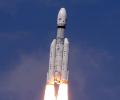
'ISRO takes a very cautious approach.' 'After reaching the moon, the orbit has to be brought down from a single elliptical orbit to a circular orbit while simultaneously ensuring the stability of Chandrayaan 3 and the health parameters of the lander and rover.'

'ISRO provides a very positive atmosphere. What matters here is your talent, not your gender,' says Ritu Karidhal, Deputy Operations Director, India's Mars orbital mission, Mangalyaan. A fascinating excerpt from Minnie Vaid's Those Magnificent Women And Their Flying Machines, Isro's Mission To Mars.

And what happens next?

'ISRO's style is a terrific example of being able to survive, acknowledge failures, and then most importantly of all, learn from them to ensure that subsequent missions are successful.'

The Mars mission is overwhelmingly irrelevant to space science and won't advance the frontiers of knowledge. It will divert attention from the real technological challenges facing the Indian space programme, and will further distort our science and technology priorities, says Praful Bidwai.
India is attempting to soft-land a rover on the moon and will attempt, at some point next year hopefully, sending humans into orbit. All of this makes an exciting time for space around the world, notes Aakar Patel.

Readers have responded resoundingly to our invitation to congratulate the ISRO team for Chandrayaan-3's successful Moon landing.

India scripted history as the ambitious third Moon mission of the Indian Space Research Organisation (ISRO) touched down on the Moon's south pole, propelling the country to an exclusive club of four and making it the first nation to land on the uncharted surface.

The four astronauts are -- Prashanth Balakrishnan Nair, Angad Prathap, Ajit Krishnan, and Shubhanshu Shukla -- Modi said at the Vikram Sarabhai Space Centre (VSSC) at Thumba near the Kerala state capital.

Billionaires are not only eyeing a profit as they push mankind out into the stars.
It appears India will be among those nations consigned to being among the watchers and not participants of this crucial phase, observes Aakar Patel.

It is important for India to develop multiple launch sites and become capable of undertaking more launches in a year's time, says Ajey Lele.

The Crew-3 astronauts will spend approximately six months aboard the space station conducting new and exciting scientific research in areas such as materials science, health technologies, and plant science to prepare for human exploration beyond low-Earth orbit and to benefit life on Earth.

It has already tasted success with the moon mission and Mangalyaan. Is man in space the next frontier for ISRO?
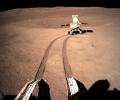
'China pumps in a lot more money than what we do. China's space budget is close to $5 billion while it is hardly $1 billion for us.' 'We manage the programmes within the constraints of our budget. The main difference is we prioritise.'
